
What a mismatch actually does
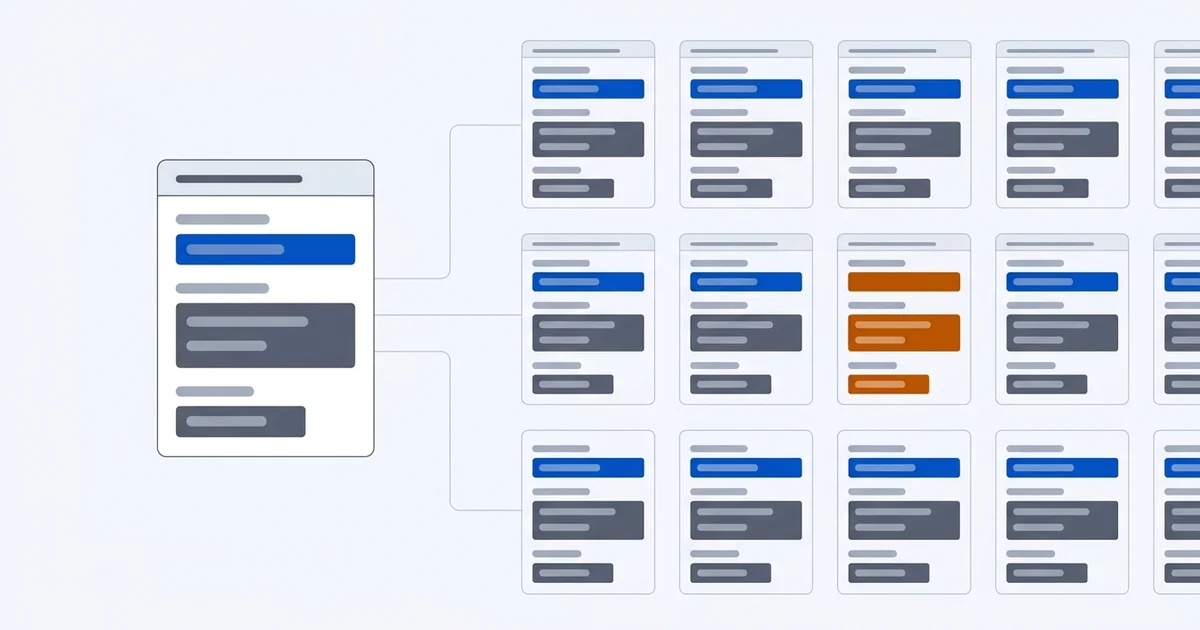
Picture an assistant answering "what is the phone number for Halvorsen Plumbing in Boise". It retrieves your profile, your website and two directory listings. Three say one number, one says a number you stopped using in 2023.
Three things can happen, none of them good. The engine can state the wrong number, because that listing happened to rank higher in retrieval. It can hedge, telling the user to check the website, which costs you the call. Or it can name a competitor whose details are unanimous and therefore safe to state.
Now multiply that across hours, address and even business name variants. Each inconsistency is a small tax on confidence, and confidence is what decides whether you get named. Businesses that work from home or travel to customers hit a specific version of this problem, covered in service-area businesses with no public address.
What NAP consistency means
NAP stands for name, address and phone. Consistency means those three facts appear identically everywhere your business is listed: your Google Business Profile, your website, directories, review platforms, supplier pages and the databases behind them.
Identically is the operative word. Not "roughly the same". Not "the same information written two ways". The same string, in the same format, in every place. Google's own guidelines ask for the same business name across locations and a precise, accurate address or service area (Google Business Profile Help, checked 21 September 2026).
This has been local SEO advice for years, but it matters more now than it did, for the reason set out in Lesson 2: Google Business Profile for AI search. AI answers are assembled from retrieved sources. When those sources disagree, the engine has to decide which to trust, and hedging is a common outcome.
How one mistake spreads
The part owners underestimate is propagation. Local business data flows through aggregators, including Data Axle, Neustar Localeze and Foursquare, which push a record out to directories, apps and navigation systems (BrightLocal, checked 21 September 2026). Many smaller directories refresh from those feeds rather than from your website.
So a stale record upstream can quietly reinstate itself downstream after you have corrected ten listings by hand. That is why the audit has an order: upstream first, then the listings that matter, then stop.
The audit pass
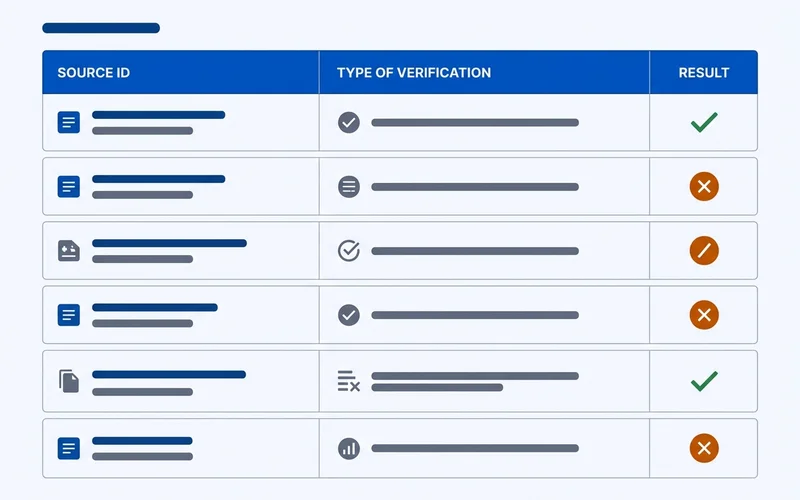
Set aside two hours. Open a spreadsheet with five columns: source, name, address, phone, notes.
- Decide your canonical form first. Exactly how the business name is written, exactly how the address is formatted, exactly which phone number is public and in what format. Write it at the top of the sheet. Everything else is measured against this.
- Search your business name. Record every site in the first three pages that lists your details.
- Search your phone number, and any old number. This surfaces listings you had forgotten and records tied to a previous owner or location.
- Search your old address if you have moved. Moves are the single largest source of long-lived inconsistency.
- Check the obvious platforms directly. Your profile, the major aggregators, sector directories, any booking platform, your chamber of commerce listing, and your own website footer and contact page.
- Mark every mismatch. Including formatting differences, which count.
Your own website is on this list for a reason. A footer carrying an old suite number, or a contact page with a tracking number that appears nowhere else, is an internal contradiction that undermines everything else you do.
Fixing it, in order
Aggregators first. Submit corrections to the major data aggregators and record the date. Propagation takes weeks, sometimes a couple of months.
Then the listings that matter. Platforms your customers actually use, sector directories with genuine standing, and anywhere sending you real traffic.
Then your own site. Footer, contact page, schema markup, any hard-coded number in a template. Structured data that contradicts your profile is a particularly wasteful mistake, since it is the one place you are explicitly telling machines your facts.
Then stop. Dead listings on abandoned directories are not worth chasing. The goal is agreement among sources anyone reads, not a clean sweep of the entire web.
Keeping it consistent
Consistency decays. A number gets ported, a suite gets renumbered, someone sets up a new listing in good faith with slightly different formatting.
Two habits hold the line. Re-run the audit twice a year, which takes an hour once the first pass is done. And when anything changes, update the canonical form at the top of your sheet first, then work outwards from the profile.
This work also underpins the off-site material in Lesson 6, where the difference between a structured citation and an unstructured mention is covered in the citations versus brand mentions guide. Getting NAP right is what makes those citations worth having.
Formatting differences count as mismatches
The part that surprises people: engines match on strings, so cosmetic differences behave like factual ones.
These all read as potentially different records:
Suite B, 1420 W Main Streetand1420 West Main St, Ste B(208) 555-0147,208-555-0147and+1 208 555 0147Halvorsen PlumbingandHalvorsen Plumbing LLCW Main StreetandWest Main Street
You do not need to panic about every variant on the open web. You do need one canonical form that you use everywhere you control, and you need the major aggregators to carry it. Write that canonical form at the top of your audit sheet and treat it as the source of truth for the business.
Phone format deserves a particular note. Pick one presentation for the public number and use it on the profile, the site, the schema markup and every listing. If you use call tracking, keep the tracked number off your public listings entirely, or you will spend the next year chasing the inconsistency you created.
What to fix first when you find conflicts
You will usually find more than you expected. Rank them like this:
- Wrong phone number anywhere. It costs you calls today, not in six months.
- Wrong or old address on a source that ranks. It sends customers to the wrong place and undermines every other location signal.
- Wrong hours, especially on the profile. The most frequently repeated fact in AI answers.
- Name variants on aggregators. Slower burn, wide propagation.
- Formatting differences on your own site. Cheap to fix, and embarrassing to leave.
- Everything else. Dead directories, abandoned profiles, listings nobody reads.
Work top down, record the date of each submission, and expect aggregator propagation to take four to eight weeks. Then re-check at the next scheduled audit rather than refreshing daily.
Sources
- Google Business Profile Help, "Guidelines for representing your business on Google": https://support.google.com/business/answer/3038177 (checked 21 September 2026)
- Google Business Profile Help, "Tips to improve your local ranking on Google": https://support.google.com/business/answer/7091 (checked 21 September 2026)
- BrightLocal, "Using data aggregators for local citations": https://www.brightlocal.com/learn/data-aggregators/ (checked 21 September 2026)